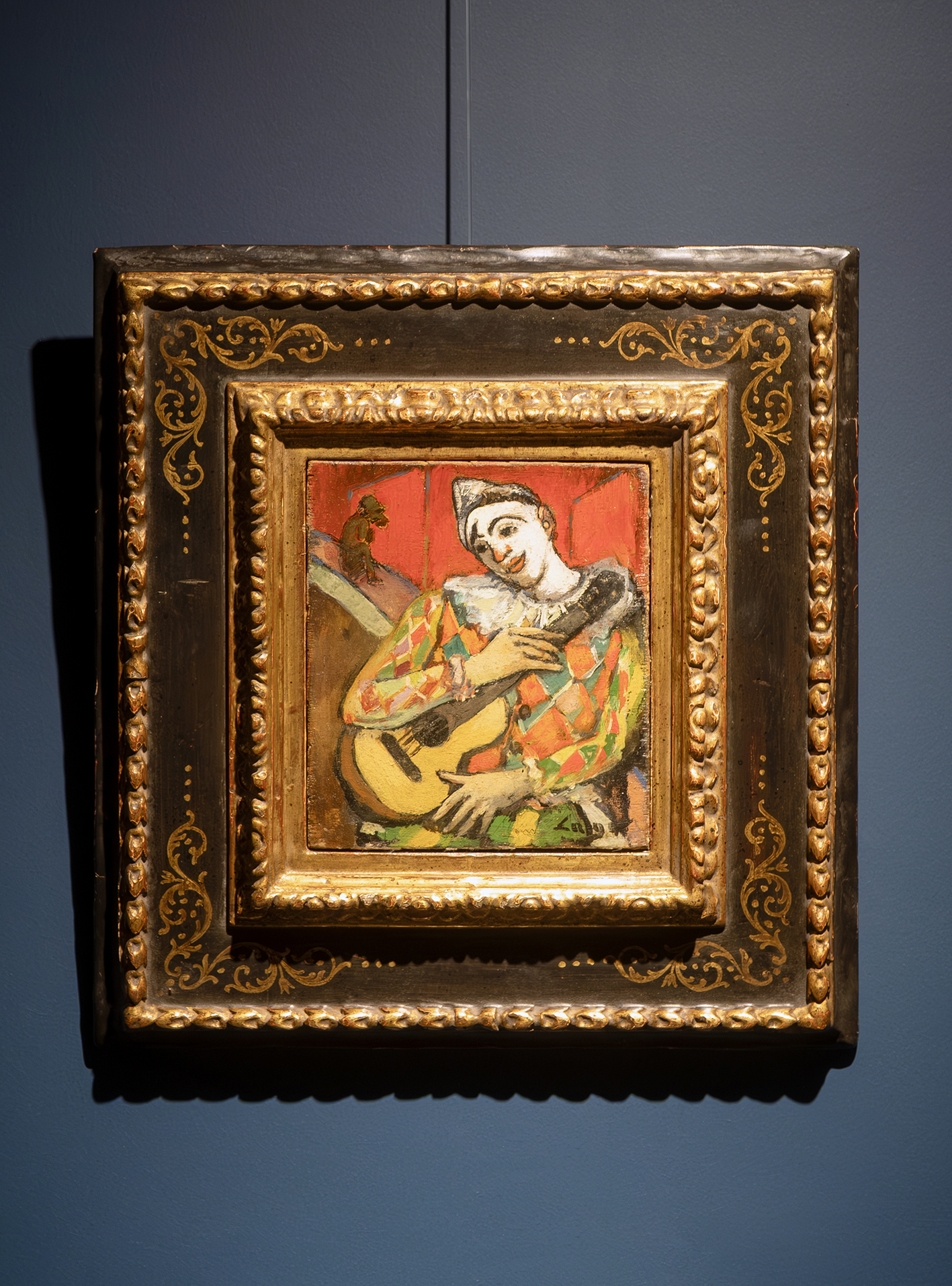
"Harlequin"
1910 - 1920
Celso Lagar, a prominent Spanish expressionist painter, was a key figure in the
“Paris School,” where he spent much of his life. A friend of Modigliani,
Apollinaire, Picasso, and Max Jacob, he drew early inspiration from avant-garde
movements: Cubism, Fauvism, and the vibrant atmosphere of Montmartre and
Montparnasse. Lagar’s fame stemmed not from abstract experiments but from
emotive scenes of circus life and wandering performers, a theme shared with
Picasso and Léger. Harlequins became his signature, symbolizing freedom, melancholy, and the chaos of life. His Harlequin series, created in 1910s–1920s Paris, reflected impressions from the Medrano Circus, popular among avant-gardists. In Lagar’s paintings, Harlequins appear in dynamic poses—with guitars, monkeys, or flowers—amid circus props or in pensive solitude. Picasso’s influence is clear, yet Lagar infused a Spanish flair, evoking Goya’s drama and warmth. His works are held in European museums: La Rochelle, Goya Museum in Castres, Honfleur, Petit Palais in Geneva, Reina Sofía, Casa Lis in Salamanca, and Carmen Thyssen Museum in Málaga. Lagar’s Harlequins embody the golden age of Parisian avant-garde, where the circus was a metaphor for vibrant, enigmatic life.