
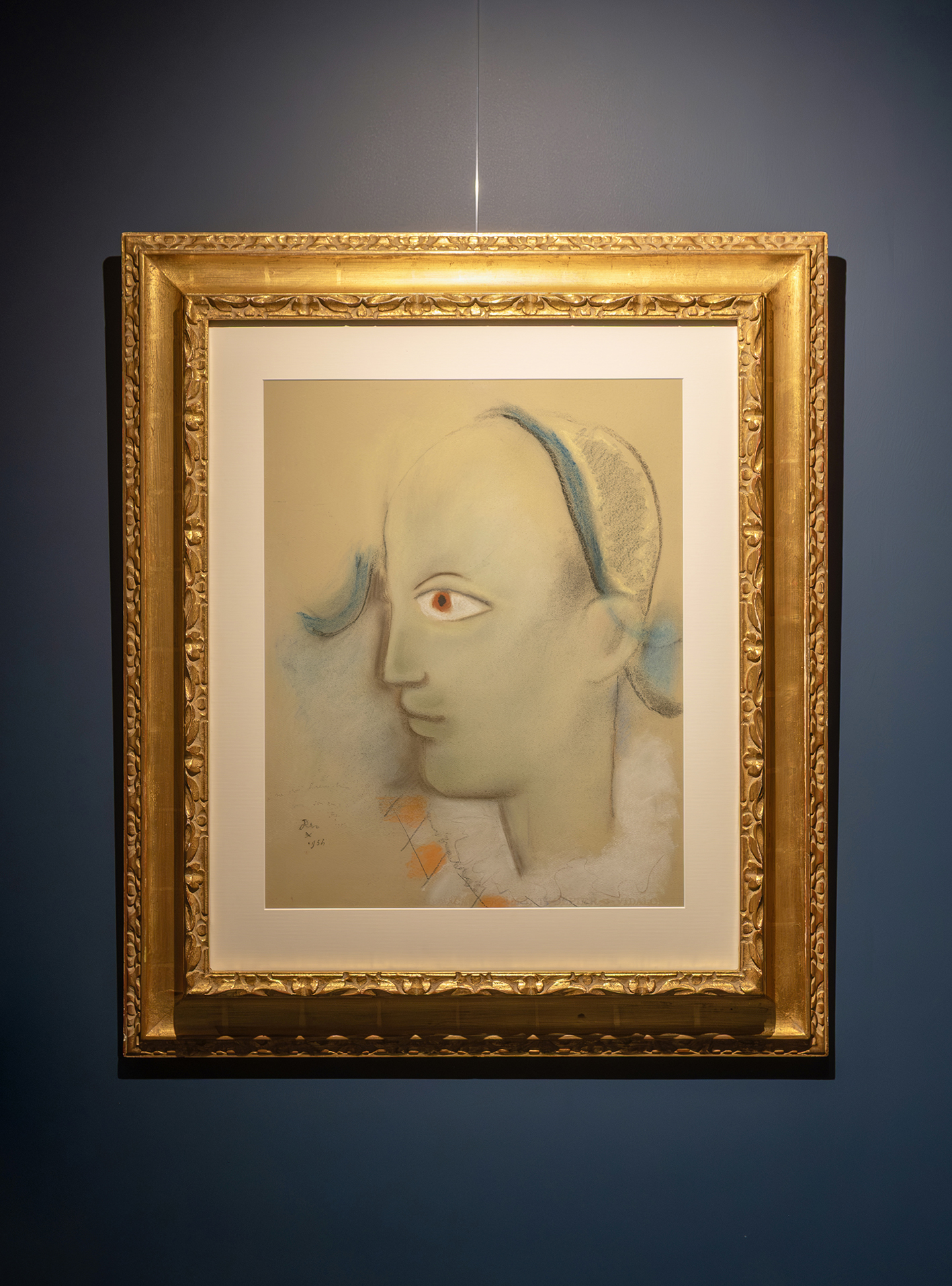
"Harlequin with the orange eye"
1954
Jean Cocteau, French poet, playwright, artist, and filmmaker, wove reality with fantasy through surrealism and mythology. His painting “Arlequin à l’oeil orange” reflects his later years at Villa Santo Sospir, where he experimented with pastels, crafting harlequin images—symbols of transformation and inner quest. Fluid lines highlight human fragility. The painting bears the inscription: «à ma chère Suzanne Blum son ami» («to my dear Suzanne Blum, her friend»). Suzanne Blum, a remarkable lawyer and one of the first women in the Paris Bar, was Cocteau’s close friend. Their bond, formed in the 1940s–50s, was built on mutual respect: he valued her intellect and strength, she his poetic genius. Theunusual masculine «son ami» underscores their equal intellectual connection. In 1954, Cocteau faced a crisis, grappling with loneliness and addiction. Drawing became his refuge, and the dedication to Blum a gesture of gratitude. His work, from poetry to painting, remains a hymn to creative freedom, inspiring the world and transcending time.